
parenting, peace, and the politics of childhood with robin grille
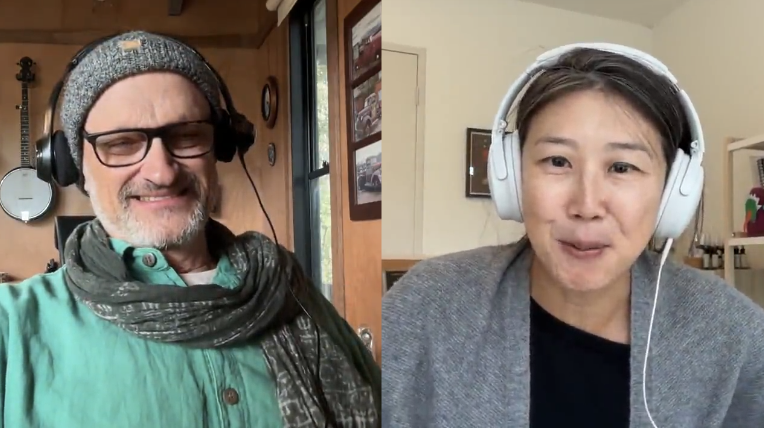
After a 3 year hiatus, I’ve brought my podcast is back! And in this inaugural return, I’ve invited a very special guest: Psychologist, parent coach and author Robin Grille. The conversation centers on Robin’s book Parenting for a Peaceful World and why the way we treat children shapes the kind of society we build.
In this episode, Robin shares how decades of work with individuals and couples led him to a bigger question: what in early life creates the patterns we later see in relationships, politics, and culture? The discussion moves from personal story to historical patterns, making the case that more democratic, empathic parenting can support a more peaceful and ecologically healthy world.
This episode is essential listening if you care about parenting, social change, peace, or the deeper causes of the world we live in. This conversation is as sobering as it is hopeful and empowering, and it leaves you with a rare feeling in times like these: that a better civilization is not only possible, but already taking shape. For those of you who prefer to read, the transcript of our conversation is available below.
listen to the episode
about robin grille
Robin Grille is a psychologist in private practice and a parenting educator. He is the author of three internationally acclaimed books: ‘Parenting for a Peaceful World’, ‘Heart to Heart Parenting’ and ‘Inner Child Journeys’. Robin has delivered his seminars and workshops throughout Australasia, North America, UK and Asia. His experiential, skills-based and informational parenting courses have helped many people to embrace parenting as a transformative, personal growth journey.
Drawing from 30 years’ clinical experience and from leading-edge neuropsychological research, Robin’s seminars and courses focus on healthy emotional development for children as well as parents; while building supportive, co-operative parenting communities. Robin’s work is animated by his belief that humanity’s future is largely dependent on the way we collectively relate to our children.
Follow Robin on Substack and read his BACKLASH series here: robingrille.substack.com or find out more about Robin Grille’s work, his books, articles and seminars visit: www.robingrille.com
parenting, peace & the politics of childhood with robin grille - deeply feeling humans podcast episode transcript
Lia: Welcome to the inaugural episode of the Deeply Feeling Humans Podcast, on how a more beautiful world is possible. I'm your host, Lia, and today we have a special guest. He's a mentor of mine, and having him here for a conversation is very near and dear to my heart.
I'd like to welcome and introduce Robin Grille. He's a practicing psychologist, working with the body in somatic psychotherapy and with relationships for about 35 years. He's also a parent coach, a public speaker, and an author. He's written three books, all of which I've read: Parenting for a Peaceful World, Heart-to-Heart Parenting, and Inner Child Journeys. Thank you so much for being here, Robin.
Robin: Good to be with you, Lia. It's a great pleasure. I've been looking forward to it.
Lia: I've been rereading Parenting for a Peaceful World, and that's something I want to talk about today. I also wanted to see where you are with it, since I know you wrote it several years ago. Is that correct?
Robin: I think it came out in 2005 — that was the first edition — and then I updated it quite substantially, and the edition you get now came out in 2013. The world keeps changing, but I look at that book and the core of what it's saying still applies. I think there's a forever quality to its thesis.
Lia: It's so relevant — even more so today, I think, in terms of sustainability and world peace. I want to include a little preface, though I don't know if this is the correct thesis of the book: would you say the key to world peace and sustainability lies in the way we collectively relate to our children?
Robin: I'd say that's pretty much the gist of it.
Lia: What prompted you to do the research in the book? The first few chapters are riveting but also horrifying — just to learn the history of how we've treated children in the past, child-rearing practices historically. What was the inspiration behind writing it? Was it the research first, or what was the process?
Robin: There was actually a moment that triggered me, which I can tell you about. Though my interest was already there, without me knowing I'd write the book. As a psychotherapist working with individuals and couples, I always find that no matter how "crazy" a person's behavior might seem, something happens when you start to hear their story — not just what happened, but their subjective experience, particularly of growing up. Something happens where you hear yourself thinking, no wonder. Even if you don't like the person's behavior, something inside says, no wonder they behave that way. Story makes sense of behavior, and it stops us from judging and condemning so automatically.
It does more than that, too. Story doesn't just make sense of behavior — it illuminates the path forward. If this is what wounded you, in a way that you've adapted by behaving in this "crazy" way that isn't working for you and the people in your life, that implies what would heal you. What are the steps you can take, and what steps can happen for you, that will give you such an experience of yourself that your behavior starts to reflect that.
That's the power of knowing the story. I've always been fascinated by people's stories — always. Even in high school, my favorite subject was modern history. I didn't know why I loved it so much, but I loved hearing the backstory to things. It gave me immense comfort and grounding to know that somehow we can make sense of the scary things that happen in the world.
My family migrated from South America. In early childhood, I wasn't in the middle of political troubles, but I could feel them all around me — sometimes gunshots outside my school, the incredible stress of my family having to pack up and leave for Australia. My parents were Romanian Jews. Although they lived through the war, they weren't sent to camps — that's a long and interesting story — but they were safe only to some degree; they also saw horrific things and their lives felt under threat.
That sense of danger in the world, that it's people-created — the biggest problems don't come from volcanoes and earthquakes and floods, they're people-created, and therefore completely optional. It doesn't have to happen like this. So no wonder I was interested in history — no wonder it gave me comfort to know that we can make sense of it.
I know I'm simplifying, but if that's what gets done to people, and then that happens to their country afterward — don't do that to people. Maybe it is that simple. For me, my life's interest in psychology was always the personal and the political, the personal and the societal, together.
I get the same feeling from understanding the backstory behind a country — it makes me go inside and say, no wonder this country has politics that look like that. It makes sense, I don't like it, but it makes sense, and that clarifies what we need to do differently.
I love combining history, psychology, and anthropology, because developmental neuropsychology puts those together — how people develop, and there's a parallel in how countries develop. It makes very clear implications about what we need to do to create the kinds of humans that will produce deep democracy and an ecological, non-violent society. We just need to do it differently than we've done before.
What happened was, during the Balkan crisis — the 80s and 90s, when Yugoslavia was broken apart and re-separated into Croatia, Serbia, Bosnia, Montenegro, Slovenia — people were fighting each other. It was horrible, it went on for years, and the whole world was worried about it. This was back when you'd read a newspaper — we didn't have YouTube then. A friend of mine, my mentor, the psychologist I did most of my training with, rang me up and said, "Hey, you've got to read this op-ed in the Sydney Morning Herald." I was living in Sydney then. Someone had written an article reviewing comprehensive studies by social psychologists into the kind of parenting that was traditionally predominant in that region of the Balkans — not modern parenting, but going back one or two generations, because what happens to children one or two generations ago is what drives the politics of now.
I went and read that. The author was an American professor at Sydney University, and what it revealed was immense. The way children were being treated — it was a very martial, unbelievably patriarchal society, traditionally. Not in the modern, middle-class urban centers, but in that highly patriarchal — which goes hand in hand with punitive and authoritarian, do-as-you're-told-or-else — culture, with punishment and shaming.
What I discovered through years of research for my book is that on a sliding scale, the more authoritarian a culture is, the more violence it produces.
Lia: Why is that, do you think?
Robin: Because you can't be authoritarian without using violence — do as you're told or else, through physical punishment and other kinds of punishment, emotional punishment, manipulation, and shaming.
In highly authoritarian family styles, children lose their self-possession and their own sense of ground. Your brain and heart are daily being conditioned to be obedient, or to be a bossy leader — a dominator — but mostly obedient, so you don't check in with yourself, you don't question authority. The violence used to create that, in the family and in school, means there's a higher predominance of fight mode — it resets your reflexes, it changes your nervous system. A very punitive childhood raises cortisol levels. I call that high-cortisol cultural parenting.
I've essentially explained the thesis of the book, but that was the moment that sparked me to start writing. I wasn't a writer up until then. I rang that professor and said, I can't believe what I'm reading — this is the first time I've heard anyone write about the childhood origins of war, the childhood origins of authoritarianism in politics. No one did that. Mostly, they still don't. You go to history class and learn about economics, what dictators do, what prime ministers and presidents do — you learn about leadership, economic forces, religious forces. No one looked at what's being done to the kids. Isn't that incredible? The largest elephant in the room is invisible.
Now that we know psychology and developmental neuropsychology — how human beings develop — we understand, and it's not controversial in the science, that a propensity toward a violent response to disagreement is conditioned, and it takes a long time to condition that in a child's central nervous system. A propensity toward obedience and asking no questions gets conditioned in a child, just as inner strength, self-assertion, belief in yourself, and a capacity for empathy — the democratic human — is also conditioned. A different style of democratic parenting produces a democratic society. It's not black or white, either/or — it's a long sliding scale.
I was so thrilled when I saw that. So I rang him and asked about it, and he said, "I'm not alone — I'm just quoting other people's studies. There's an entire branch of history called psychohistory, where that's what they study: what is the life of children like in any particular place." My mind exploded. I subscribed to the journal and started reading all their books.
I discovered that psychohistorians can explain why there's social evolution toward democracy and peace in many, many places — and they can also explain why a nation sometimes descends into chaos and violence. What's happening in the United States at the moment — psychohistorians will be studying that in terms of how a critical mass of children have been treated in the US for the last couple of generations. It's unbelievably eye-opening — you get huge "ah-ha" moments.
That's what got me started writing articles about it — I thought I'd stumbled across something important, to some degree a kind of formula for a better future. Out of those articles came the book, Parenting for a Peaceful World. I found it awful to write and exhilarating, all at the same time, because I looked at childhood for many centuries, on every continent, as much as the record is available — and for a majority of children, for much of recorded history, it was horrific. Just awful. Rereading the book, you find it's not a pretty picture.
Lia: I was actually wondering how you managed to write it without sinking into a well of despair.
Robin: I didn't manage — I did sink into a well of despair, at times. There was a moment I sort of broke down. A couple of moments. But the good news that comes out of it is all the more powerful, and that's what keeps me healthy.
The flip side of this — the implications — are really amazing. There's another question to ask: how do I manage my excitement about it? Because sometimes that can be too much.
A lot of people right now are in despair, thinking the world's going crazy. I can tell you it was already crazy. A lot of people have the thought, consciously or not, that human beings are irredeemable — I often hear the rhetoric that we should be wiped off the earth, that the earth will be happier without us, that we're just a violent species.
I want to put a stop to that. For human beings to create a society that produces a lot of violence, that's how badly you need to treat the children, or a critical mass of them. If that's how we've been treating children — and it was bleak — how do you expect people are going to behave? In other words, the violence of human society is not a fixed trait of the human animal. It's an optional one. It's what happens when our nervous systems have been kicked around really hard. Therefore, it's optional.
And it's not just a theory that we can produce a peaceful society — the anthropological record is incredibly clear. We've done so in many notable civilizations in the past, and some today. Those civilizations that existed and endured for centuries without being warlike were very egalitarian and very gender-balanced — women and men together in every position of influence. Their parenting styles were remarkably different from what most people have done: highly democratic, gentle, and empathic — and look what it produced.
In the book, I talk about modern examples too, like the Scandinavian countries, which — long before they even had research telling them to — started pro-child initiatives prohibiting corporal punishment of children. Sweden was the first, in 1979, then the other Scandinavian countries followed. Now there are about seventy countries where it's illegal for a parent to strike a child; it's classified as domestic violence, a criminal offense. Sweden started that. They didn't wait for research to say it was bad. And their parental leave provisions are incredibly generous, so parents can spend time with small children without fearing for their financial security. That's transformed their civilization in a generation.
If you look at the indexes of happiness in those countries, the quality of their democracies is far better than in Australia, the United States, or England. Their environmental policy is far better too. So the record is clear — treat children better for their emotional development, and you change the politics of a country. You produce a more ecologically sound society, lower crime rates, fewer entanglements in war.
The exciting part too is that it's not horrible all the way across. In the last couple hundred years, there's been a distinct evolution away from the more grotesque levels of violence people used to do to children. There are new parenting approaches growing in the modern world — some might argue they're not new, that they're a return to an old way. Either way, it's changing, and it's already producing measurable changes to our societies.
I want to play my part in broadcasting the idea that an essential cog in the engine of social change has to be changing the way we support families and do education — less authoritarian, more democratic and empathic, in parenting and in school. Otherwise it's no good making better laws when the next government can just change them back. The United States is an amazing study for how environmental law, say, can leap forward and then be completely undone with the stroke of a presidential pen. So changing the laws is necessary but not sufficient — we need to change the neurobiology, the hearts of people, from the ground up, and then changes in the law will stick. It comes back to childhood as the fuel, the driver of history.
Lia: From my experience rereading the book — I usually read at night, and then I come down every morning and tell Joris, my husband, "You know, as I move through the chapters, holy moly, did you know this — this is how we treated children in the past." And as awful as it is, I'm like, well, in a way we've come a really long way. All that stuff wasn't that long ago. But at the same time, I'm like, we've come a long way, and it's so clear — this relationship between child-rearing and world peace, and empathy, and all of that. To me, I'm like, why don't we talk about this more, as a form of activism, as a form of change? That, to me, is the arc that I went through.
Robin: I find it frustrating — I have exactly the same question. Why aren't we talking about this more, as a central part of activism? The people who are reformers of childhood — in breastfeeding, democratic education, healthy attachment, nonviolent parenting, natural childbirth — those movements are big and powerful and international, and they do that work for the children and for families, but they don't necessarily include in their narrative that this isn't just good for children and families — it's going to produce different politics in your country. That's okay, they're doing the work.
The part I find really frustrating is that social activists — all the ones I love, the environmentalists, the people fighting for social justice, everything I really care about — their eyes kind of glaze over, and they don't include the childhood story. Social activism gets relegated to chaining yourself to trees and marching down the street with placards and law reform. All of that great stuff, of course we need it. But it frustrates me that what's called activism doesn't include changing childhood. As I said, you can change all the laws you like, but people will just change them back if we're not changing what it is to be a human. That's happened time and again.
I've had people who understood my work and the work of psychohistorians try to invite me to conferences about ecological activism and social justice, very enthusiastically saying, "We've got to get this guy talking about the childhood thing." And then the committee looks at it and goes, "Hmm, not really relevant." It shocks me.
Lia: Maybe they think it's too slow — it's not an immediate action like tying yourself to a tree.
Robin: That makes sense, yes, that does occur to me. Which is why I think child-rearing reform isn't the everything — it's not going to give us a better society by next week, but definitely within a generation. It's slow in terms of the things we need changed by next week. A hundred percent. But if we don't do it, whatever we change by next week is at risk of being changed back. In my mind, I don't see that as a real choice. I'm not saying child-rearing reform instead of the other stuff — I'm saying we better tack it on.
Lia: I have a thought — given the psycho-historical perspective of the past few centuries, how child-rearing practices were so horrific, but now we've come quite a long way — do you think we should be doing better? How can things go back so quickly, like you said, at the stroke of a pen?
Robin: I absolutely thought that too, and I kept doing the research into key indices of social evolution after the book was published, in 2013 — tracking how democracy was growing or going backward as a general trend around the world, and measures of violence. There's good data out there — centers for conflict studies, journals, world data on domestic violence, criminal violence, international violence, war, civil war, and environmental policy too.
For a while, things were improving, and it felt like the good stuff was accelerating — a tremendous expansion in democracy around the world. There's a theory called democratic peace theory, with good data behind it, that two democracies don't fight each other. War is always a democracy against a dictatorship, or a dictatorship against a dictatorship. So the more high-quality democracies there are, the closer we get to eliminating war altogether. The graphical trend on that was very uplifting.
And then it felt like everything went backward, and it was upsetting — I felt bewildered for a while. What I didn't anticipate was the rise in fascism, all over Europe, South America, the United States, the UK — a resurgence of quite virulent racism. After the Me Too movement, there was a renewed confidence in the rhetoric of misogyny — the "manosphere" is quite bold about it. The United States, the most powerful and influential country in the world, went into severe retrograde, or appeared to — though actually that had been building for a long time, since the 1970s, which is a longer story.
Looking at it more closely, I've come to understand the current resurgence of fascism as a backlash. The old world is dying, it knows it, and it's fighting for its life, very viciously. I've written a series of articles about this on my Substack — my backlash series — and I'm still adding to it. In a way, it's a segue from Parenting for a Peaceful World.
The old systems of power and domination are being dismantled. They feel themselves in tremendous threat. Patriarchal systems are going — think of the Andrew Tates, the Epsteins, the manosphere. What we're now all appalled by used to be normal, not that long ago — power and sexual abuse have always gone hand in hand, though they don't tell us that in the history books. Now, at least most of us recognize that as an aberration to be hunted down and removed. That we're so horrified — that it's normal to be horrified — is actually an evolutionary leap forward.
If you doubt that patriarchy is being buried, look at how many countries now have marriage equality enshrined in law — that's like kryptonite to a patriarchy. It's a symptom that we're becoming more open and tolerant, fascinated by diversity, not just tolerant of it — and that makes us more peaceful.
National identities are under threat too — that's a very strong feature of dominator culture: who am I, I'm a white Australian, or a Japanese person, and we rule, and this is ours — identified with the flag and the anthem. That's dissolving tremendously because of mass migration, people mixing across ethnicities so much more in our families. I look at my extended family and just about every continent is represented somewhere in it, and I think that's a growing truth. That's confusing and extremely threatening to the old dominator culture — that's why you hear the rhetoric about migrants attacking your job. It's the same rhetoric used in Nazi Germany in the 1930s.
Backlash is a very well-studied sociological phenomenon. When social change has grown past a certain level, the remaining old world will suddenly fight hard and push back very hard, and it feels like the world's going backward. It's actually a late stage in positive change. Things do go backward for a while, but I think even the backlash is starting to lose steam. There are still horrific flashpoints around the world we need to stay alert to, but comparing to where we've come from, there's an unmistakable forward momentum. We've been under backlash for at least ten years — when you understand that the increase in bad news is part of a backlash system, it helps you make sense of it in a whole new way. You'll be worried, but not in despair. You'll be worried with agency.
If anything, the message of reforming childhood is all the more urgent and relevant — and I'm not just thinking in terms of fixing the awfulness, but in terms of building a more beautiful civilizational response to the world. We're doing it in so many ways, and we can do a lot more. I'll give you a hint from my backlash series: my last episode was on regenerative agriculture. I'm not a farmer or a grower, and the article isn't about regenerative agriculture per se — it's about the psychology of it.
Farming for thousands of years was about how much you could extract from a piece of land — it's mine, let's see how much I can get out of it, then squeeze even more. There's a narcissism in that, an implicit violence — a war against nature. Regenerative agriculture is a complete reversal of that psychology, because its central premise is to listen and ask the land what it needs, what the plants need, what the soil needs. They don't grow one crop — they grow ecologies. It's called regenerative because the soil actually improves in quality over time — it's organic plus.
And, Lia, the first act of regenerative agriculture is listening. The first act of empathic parenting is listening too. You do more listening with children, and with each other in our relationships, and it produces a listening mode of food production in the world. It's science-backed — near where I live, there's the first university to teach it as a degree course, and it's growing incredibly rapidly around the world. Everything we thought was normal farming is actually degenerative agriculture, slowly killing the earth.
There are several examples like this of really good changes happening, and you won't hear about them in newsfeeds, because newsfeeds tell you about events, not about these big movements that are consciousness-raising in ways that get manifested in what we do in our systems. They'll tell you about the war, the election, the forest fire — not the slower, deeper shifts. I'm chronicling that in the backlash series.
Lia: The link to that will be in the show notes — Robin's Substack. Robin, our time is going. Is there anything else you'd like to mention with regard to this conversation, for now?
Robin: I'd really appreciate it if people gave my articles a glance, especially if you've already read Parenting for a Peaceful World — I'd like feedback, commentary, engagement. And I want to encourage everyone to see themselves as an activist, even if you've never stepped foot in a protest or signed a petition.
If you have anything to do with children in your life — as an auntie or uncle, a school teacher, a grandparent, a parent, or just the kids next door you're friendly with — your interactions send ripples that are extremely powerful. I'm not saying this sentimentally; it's measurable. Everybody's agency is so much greater than they think.
In thirty-five years as a psychotherapist, I can't count the number of times an adult, in midlife, has told me their story — a childhood filled with abuse and chaos and loss, very fractured, carrying a lot of trauma — and there was one person, a neighbor, a grandparent, or a very kind, attentive, empathic teacher, someone they spent very little time with, who said one thing, and that was a turning point in their life. They still go back to that voice, and almost always they'll weep when they talk about that person. In the middle of chaos, one empathic voice that really sees you changes your life — sets you on a path where you know that what you deserve is different from what you've had.
What would happen if enough of us were thinking that way? What would happen to a nation? This translates politically — it adds up. Every beach is made of particles of sand. The sand adds up. We add up.
Any idea that we're helpless — that we don't count, that we can't make a difference — is a swindle, a lie, and it's inherited. It was taught to us. If you've ever spoken with a child in your life, you're a social activist. Might as well own it.
If you're the kind of person who looks for specific movements to participate in, there are plenty — people doing incredible things, transforming education. You're one of them, Lia. You went and thought, schools should be different — why don't we make our own? That's extraordinary.
Lia: Thank you. A lot of it was inspired by your work as well.
Robin: That makes me so happy to hear, and it comforts me too — whenever I hear of a project like yours, it comforts me a lot. I don't need things to be nationwide, because I know how things add up. There are people who are activists in more empathic styles of parenting, breastfeeding, reforming childbirth — all kinds of things. I'm stopping myself here, because if I don't edit myself, I'll say too much.
Lia: Thank you, Robin. Wow — I'm getting tears, just from feeling touched and empowered by the agency that we have to make a difference, and how it does add up. Sometimes it's easy to lose sight of that. Just reminding myself of it helps. Thank you for being here.
Robin: Thank you for having me. You'd have to know that your work as a parent, as a healer, and as an administrator or teacher — I forget which, in the school you've created — will go further than you can imagine. These kids you spend time with are going to grow up, form organizations, lead things, interact with people you'll never even know about. They'll vote, they'll volunteer. Little pieces of Lia, and your commitment to a more empathic style of relationship, a more empathic group environment, will be reverberating and bouncing along five, six, seven, twelve generations, in parts of the world that would take your breath away. That's just how it works.
The other thing to consider: while you're doing something that feels small, because your eyes only see the room with a little bunch of kids in it, remember all the other people doing the same thing — there are too many for you to keep track of. If you ever feel alone and small, hunt for your compadres, your people. You'll see there are legions of others moving in a compatible direction. Same language, different accent.
I think we all need to do that, because we get weak when we fall into the delusion that we're alone. It's a delusional state, and it robs us of beautiful enthusiasm. I feel that way sometimes too — like I fly solo, and I get sad and despondent about it. Then I realize, hang on, that's just a way of defining things. I do work alone in a way, but the whole time I'm connecting with people like you, speaking at conferences, connecting with so many people. I'm not alone. When I wrote that book and threw it out into the world, I made such magnificent, beautiful friends all over the world. So, this "alone" thing — I'm not sure about it. Sometimes we just need to look out the window, and we'll see that we're not alone.
Lia: You're right, absolutely. Thank you for that reminder, and for sharing. I think it's time for us to wind down this conversation — I hope there will be more, because it feels like there's so much to talk about. But I just want to get in these two questions. The first: what are you celebrating lately, or what are you finding challenging, or both?
Robin: This might at first sound off-topic, but it's really not, not for me. My wife and I live on some acreage, mostly forested — native forest here in northeastern New South Wales, Australia. We have wonderful wildlife here, incredible bird life. We've been working very hard on what we call in Australia "bush regeneration" — removing toxic foreign species that were brought here from around the world and don't belong, that harm the ecology, and making space for the natural ecology to regenerate, sometimes planting directly.
It's hard, physical, overwhelming work, and immensely rewarding. We've been fortunate to receive help from wonderful people — scientists, local bush regeneration teams, tree planters, and local Aboriginal groups who've helped us learn what they've done for tens of thousands of years, an incredibly sophisticated way of burning the land that's necessary for the Australian ecology.
The reason this feels completely relevant to what we're talking about is regeneration itself. I find it almost like a sacrament — it's taught me so much. When I'm working on the land, I'm thinking all the time about child-rearing reform and how societies are changing. The bush teaches me things — don't worry so much about the weeds, they play an interesting role; feed the things that are healthy and watch what happens. Lessons like that have an application for me as a parent and psychologist, and they've been slowly transforming the way I work.
As we do this work, we're connecting with communities doing the same thing, and watching bush regeneration take off in Australia so quickly. Indigenous people are being asked by local, state, and federal governments, funded, and being told, "Can you please teach us how you used to do it? You had it right." It's uplifting people who've been horrifically maligned in the Australian genocide against indigenous people — bringing them beyond toleration into respect and admiration. There's a national healing happening that isn't politically organized, it's just happening naturally, as instincts change toward commitment to the land, and how much happier we are when we bank on that rather than on our shares portfolios.
I'm very uplifted by that movement. We're returning to the memory of being in a circle in everything we do — re-ecologizing, rewilding. Everything is so much more efficient inside the circle. The circular economy is coming too. I love how democratic, empathic parenting is really changing our ability to see that, and to give ourselves to it.
As for what I find challenging — I'm really worried about the technologies invading and removing our attentiveness, our state of health, which have gotten terribly out of hand and aren't regulated properly. As we're trying so hard to become more mindful, screen addiction and screen overuse are reversing that — making our brains lose the capacity to focus and pay attention, which is the center of everything. I'm very worried about that, and about AI psychosis — it's a real thing. I think it's a devolutional influence, and we need to clamp down on it, so these technologies work for us and we're in charge of them.
If there's any upside — and this is anecdotal, I don't have data on it — I'm hearing from a lot of people that the more we get seduced by artificial intelligence and the invasiveness of social media, the more some people are starting to say, "My God, I just want to hear real people singing a real song and making mistakes. I want to read real people's writing that sounds like there are errors and grammatical problems in it. I want to be near the pulsating heart of a real person." It's making us hungry for personhood, for the messy connection with our fleshy species.
I think AI and social media are starting to make us feel desperately hollow and manic, and it's causing real harm. If there's anything good that comes from it, it's a backlash — one I'm actually enthusiastic about, a backlash against social media overuse and AI. That stuff needs to be put on a leash and controlled, like every other machine. You own a lawnmower, you mow your lawn, then you put it away and close the cupboard, and you don't touch it for three weeks. That's it.
Lia: Thanks, Robin. Thank you again for being here. I'll include all the information to learn more about Robin and his work in the show notes below — he also has a website, www.robingrille.com, and the link to his Substack is below. Thanks for being here, everyone, and also Robin, for your time.
Robin: I really appreciate the opportunity to talk with you, Lia. It's fantastic to see you again — and congratulations on the work you're doing.
Lia: Thank you.
Robin: Thanks for today, and thanks to everyone listening.
hello there, thanks for being here!
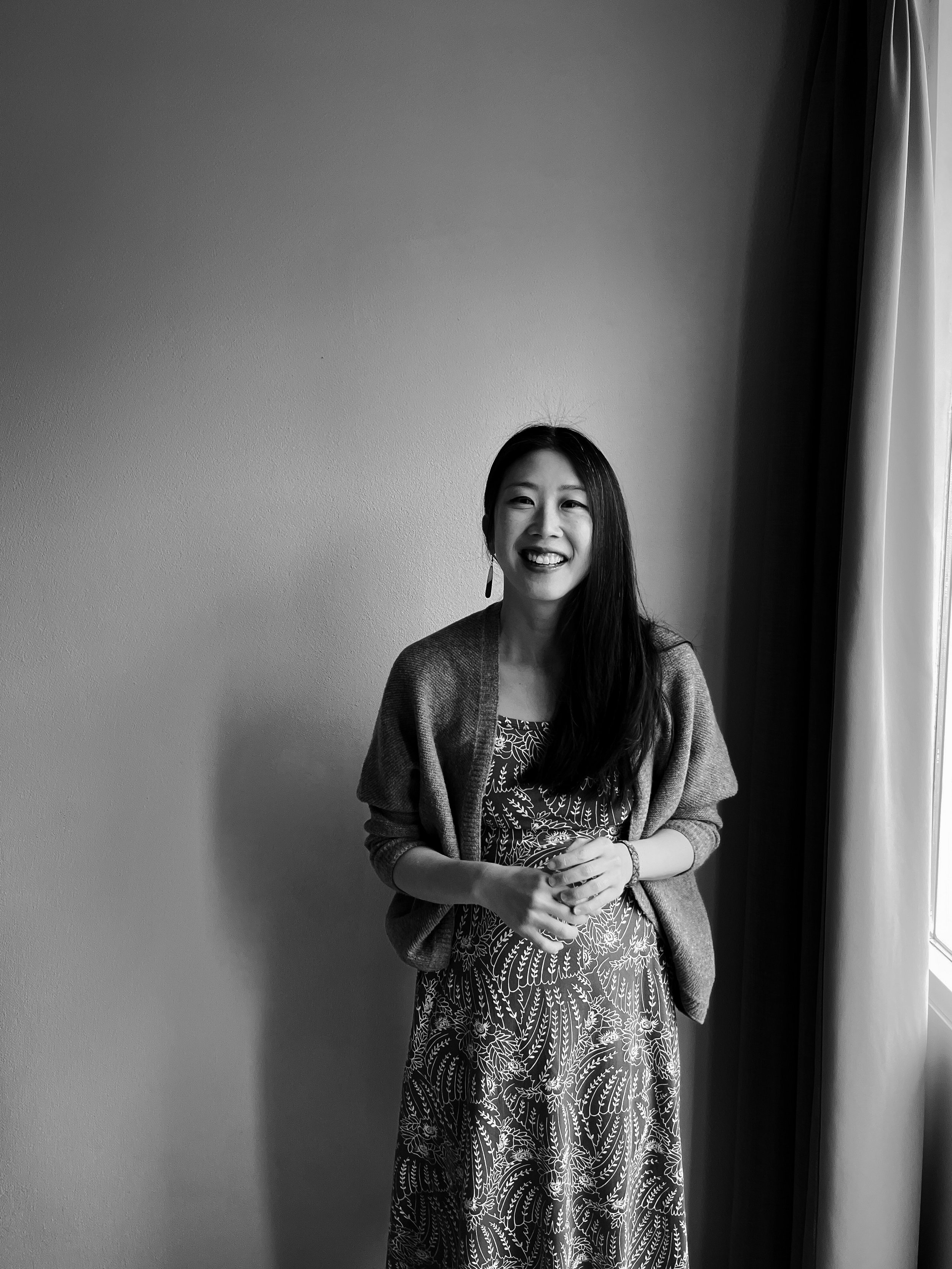
I’m Lia, and I’m a kinesiologist dedicated to helping humans move through life with more capacity and connection. Using muscle response testing, I work with your body’s natural responses to identify stressors and imbalances that may be impacting your well-being. My role is to support you in having greater capacity to find balance and ease—physically, emotionally and energetically. You can book a session with me in Eindhoven or online, or learn more about it here. xx